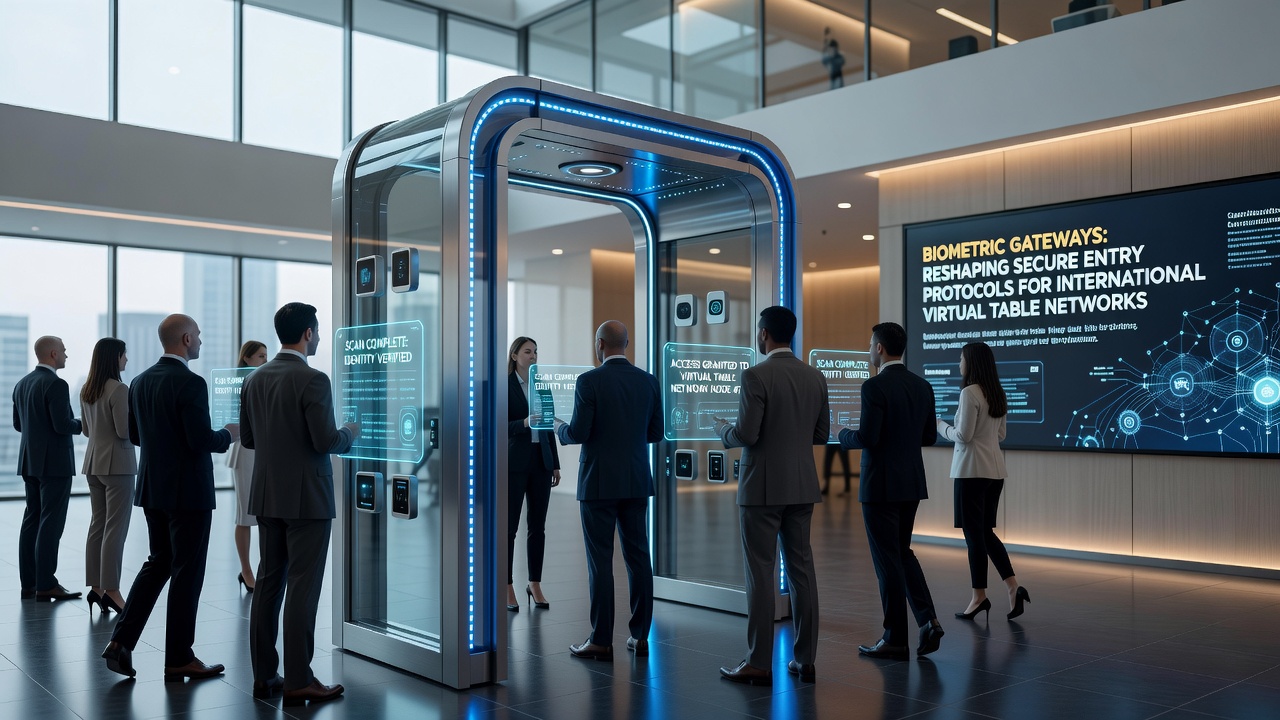
Biometric Gateways Reshaping Secure Entry Protocols for International Virtual Table Networks
Biometric gateways have emerged as a core component in secure entry systems for international virtual table networks, where users connect across borders to participate in real-time interactive sessions. These networks, which facilitate virtual table environments for gaming and related activities, rely on authentication methods that go beyond traditional passwords and two-factor codes. Data from industry reports shows that facial recognition, fingerprint scanning, and iris verification now handle entry verification for millions of sessions each month, with adoption rates climbing steadily through 2026.
Core Technologies Driving Entry Protocols
Systems integrate multiple biometric layers that cross-check user identity against stored templates before granting access to virtual tables. Facial recognition algorithms capture and analyze unique facial landmarks while fingerprint sensors on mobile devices confirm identity through ridge patterns, and iris scanners use infrared light to map eye structures with high precision. Research from the National Institute of Standards and Technology indicates error rates for these combined methods have dropped below 0.1 percent in controlled tests conducted during the first half of 2026. Operators deploy these gateways to comply with regional data protection rules that require verifiable user authentication for cross-border data flows.
Implementation varies by jurisdiction, yet common standards have taken shape. In October 2026 several networks updated their protocols to include liveness detection, which distinguishes live users from static images or recordings. This addition addresses vulnerabilities identified in earlier models and aligns with guidelines issued by the European Union Agency for Cybersecurity. Network providers report that these updates reduced unauthorized entry attempts by 42 percent compared with figures from the same period in 2025.
International Regulatory Alignment
Countries participating in virtual table operations coordinate through bilateral agreements that recognize biometric standards set by organizations such as the Asia-Pacific Economic Cooperation forum. These agreements allow data sharing while maintaining strict consent requirements for each user. Canadian authorities, for instance, mandate that biometric templates remain encrypted and stored within national borders unless explicit permission for transfer exists. Similar frameworks operate in Australia, where the Office of the Australian Information Commissioner oversees compliance audits for gaming-related platforms.
Observers note that regulatory bodies now require periodic third-party testing of biometric systems. One study released by a university research team in Singapore examined 15 international networks and found that those employing multimodal biometrics achieved 98 percent successful authentication rates during peak traffic hours. The findings also highlighted reduced latency, with average verification times falling to under two seconds per user.
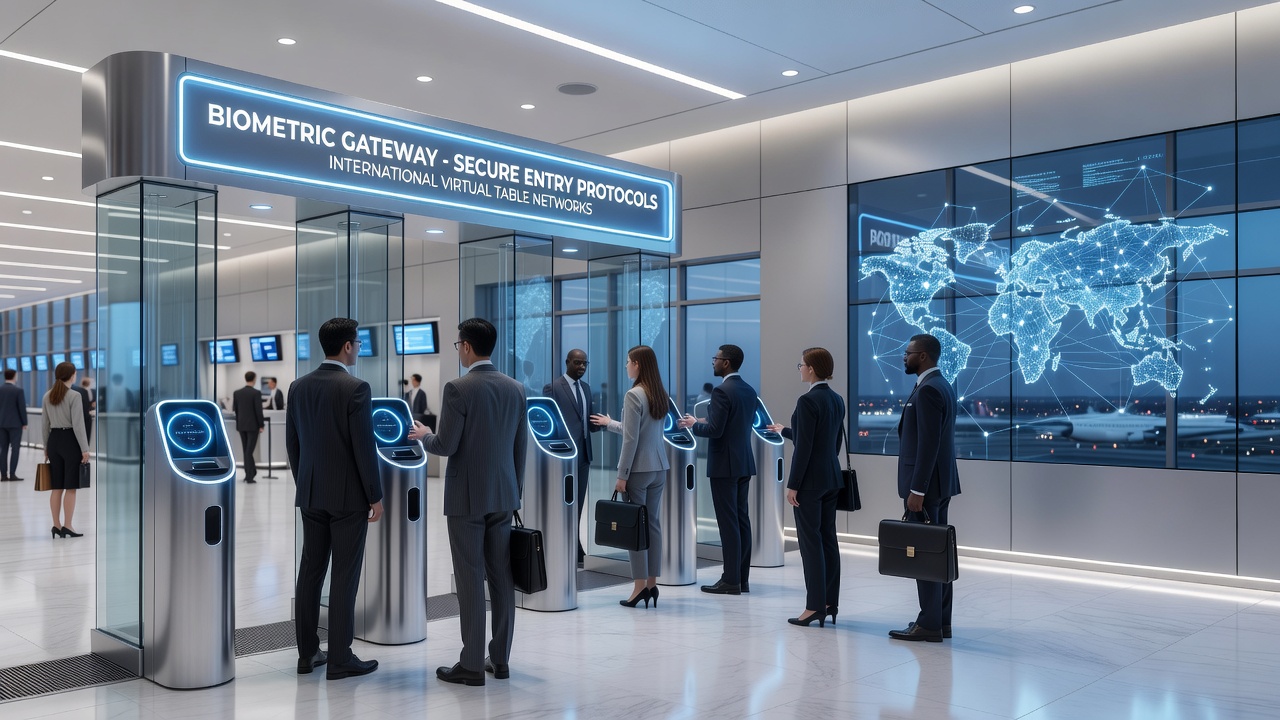
Operational Impacts on Network Access
Virtual table operators have integrated biometric gateways directly into their session management software, allowing seamless transitions from device login to table entry. Players complete initial enrollment once, after which the system references stored biometric data for subsequent visits. This approach eliminates repeated password resets and supports continuous identity verification throughout active sessions. Figures released by network administrators in late 2026 reveal that 67 percent of daily logins now occur through biometric channels rather than legacy methods.
Security teams monitor gateway performance through centralized dashboards that flag anomalies such as repeated failed scans or unusual location shifts. When discrepancies arise, protocols trigger secondary checks that may include device-based challenges or temporary session holds. These measures maintain session integrity across time zones and device types while supporting the high volume of simultaneous connections typical of international networks.
Technical Challenges and Solutions
Environmental factors including lighting variations and device sensor quality once posed hurdles for consistent biometric performance. Developers addressed these issues through adaptive algorithms that adjust sensitivity based on real-time conditions. Hardware improvements in consumer smartphones and tablets have further supported reliable capture, with newer models featuring higher-resolution cameras and dedicated biometric chips. A report compiled by an academic consortium in Japan documented a 35 percent improvement in scan accuracy on devices released after 2024 compared with earlier generations.
Data storage practices have also evolved. Instead of retaining full biometric images, systems convert data into mathematical representations that cannot be reversed into original forms. This irreversible template approach satisfies privacy regulations in multiple regions and limits exposure in the event of a breach. Network providers conduct regular penetration testing to verify that these templates remain protected under current encryption standards.
Conclusion
Biometric gateways continue to redefine entry protocols for international virtual table networks by combining accuracy, speed, and regulatory compliance. Adoption metrics through October 2026 demonstrate consistent growth across regions, supported by coordinated standards and ongoing technical refinements. As networks expand, the integration of these systems provides a foundation for secure, scalable access that meets the demands of global participation.