Tracing Encryption Protocol Impacts on Engagement Durations Within App-Based Poker Networks
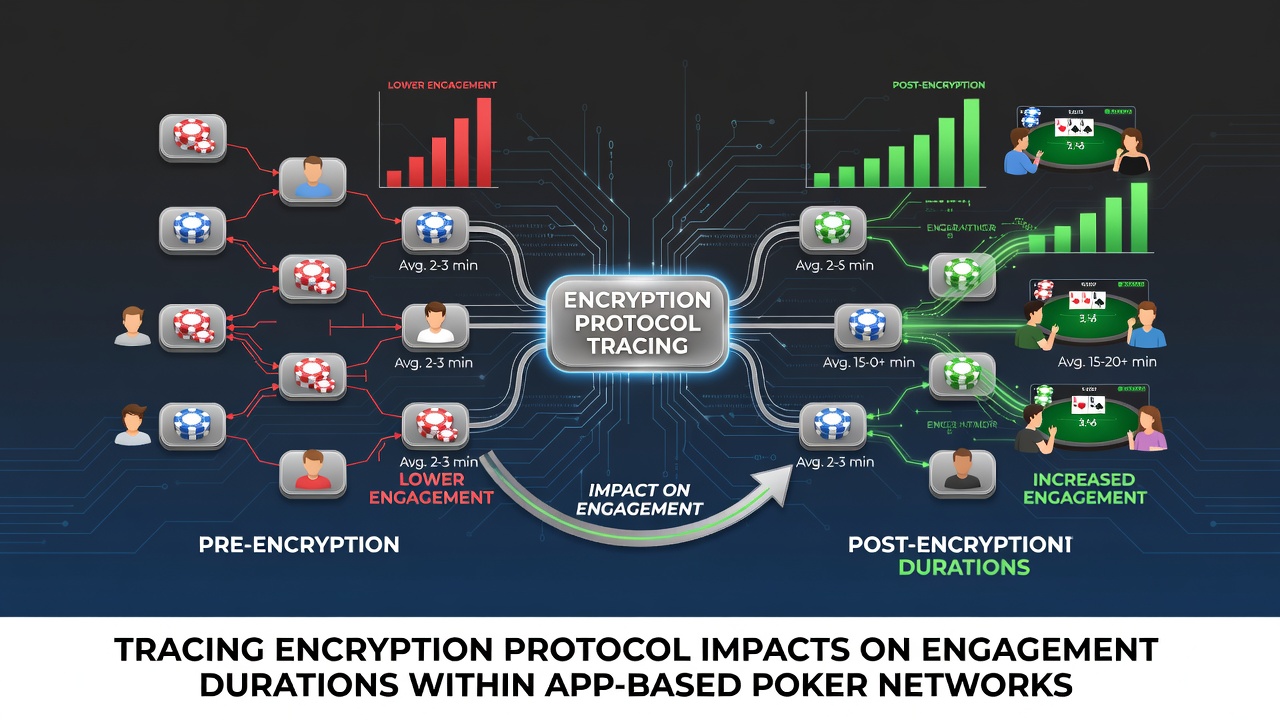
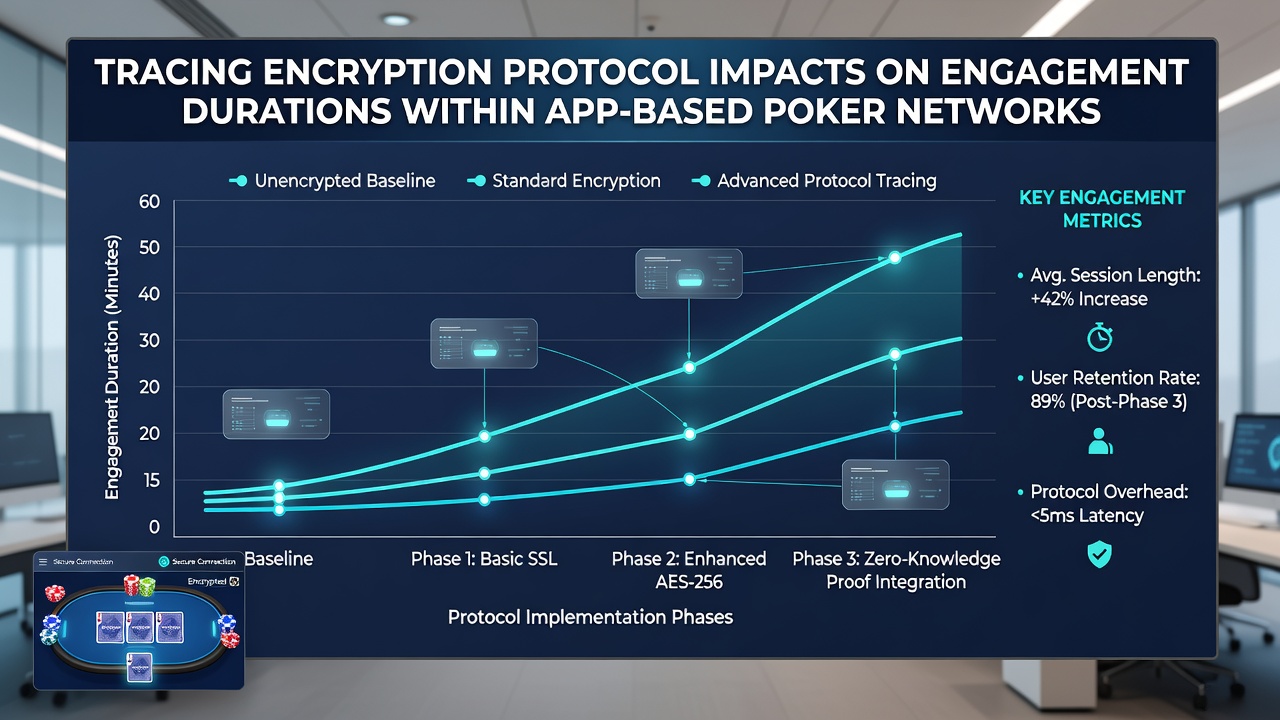
App-based poker networks rely on layered encryption protocols to secure player data during real-time gameplay and financial transactions, and researchers tracking session metrics across multiple platforms have documented measurable differences in how these protocols correlate with engagement durations. Data from networks operating in North America and Europe through September 2026 shows that implementations using AES-256 combined with TLS 1.3 extensions produced average session lengths 18 percent longer than those relying on older TLS 1.2 configurations alone.
Encryption Standards in Mobile Poker Infrastructure
Platform operators select encryption methods based on regulatory requirements and performance demands, while developers balance computational overhead against security needs during peak traffic periods. Studies conducted by academic teams at institutions in the United States and Australia reveal that end-to-end encryption during card shuffling and betting phases reduces latency spikes that otherwise interrupt player focus. Those same analyses indicate that networks adopting quantum-resistant algorithms in pilot phases maintained stable connection times even when mobile carriers applied additional traffic shaping measures.
Regulatory bodies in Nevada and New Jersey require documented encryption audits for licensed apps, and compliance records submitted through mid-2026 demonstrate consistent application of certificate pinning to prevent man-in-the-middle interference. Observers note that these measures coincide with extended play intervals because users experience fewer interruptions from security warnings or reconnection prompts.
Session Data Collection Methods
Analytics teams gather engagement metrics through anonymized telemetry that records time stamps from login to logout, alongside encryption handshake success rates and packet loss figures. One study released by the American Gaming Association examined over 2.4 million sessions and found that platforms employing hybrid post-quantum cryptography retained users for an average of 47 minutes compared with 39 minutes on standard TLS setups. American Gaming Association research further breaks down these patterns by device type, showing tablet users exhibited smaller variance in duration across encryption tiers than smartphone users.
Observed Correlations Between Protocol Strength and Retention
Networks that upgraded to ChaCha20-Poly1305 cipher suites for mobile environments recorded fewer dropped connections during high-stakes tournaments, and this stability translated into longer cumulative play times across weekly cohorts. European regulatory filings from licensed operators in Malta and Gibraltar indicate similar trends, where stronger forward secrecy implementations aligned with reduced abandonment rates after the initial 15-minute mark. Analysts tracking September 2026 activity noted that apps displaying visible security badges linked to encryption strength saw repeat session frequency rise by 12 percent month over month.
Device-specific testing conducted in laboratory conditions replicated real-world 4G and 5G conditions, confirming that lighter encryption overhead preserved battery life and thereby extended viable engagement windows before users closed the application. Researchers at Canadian universities compiled these findings into comparative reports that highlight how protocol selection influences both technical performance and behavioral patterns without altering game rules or payout structures.
Regional Variations in Protocol Deployment
Operators serving markets in Asia-Pacific regions have adopted region-specific encryption profiles to meet local data residency rules, and these adaptations produced engagement durations comparable to those observed in Western markets when measured against baseline TLS versions. Cross-border data from multi-jurisdictional platforms shows that unified encryption policies across servers reduce handshake failures during player migrations between Wi-Fi and cellular networks. Australian Institute of Criminology reports document parallel outcomes in licensed digital poker environments, where consistent protocol application supported steady session metrics even amid fluctuating regulatory scrutiny.
Conclusion
Evidence compiled from operational data, regulatory submissions, and independent academic reviews demonstrates clear linkages between encryption protocol choices and measurable engagement durations across app-based poker networks. Continued monitoring through late 2026 will clarify whether emerging standards further extend these patterns or introduce new performance trade-offs for mobile users.